Jakob Frank · 2 November 2026
Humidity Data Guides Conservation of Duskridge Moss Habitats
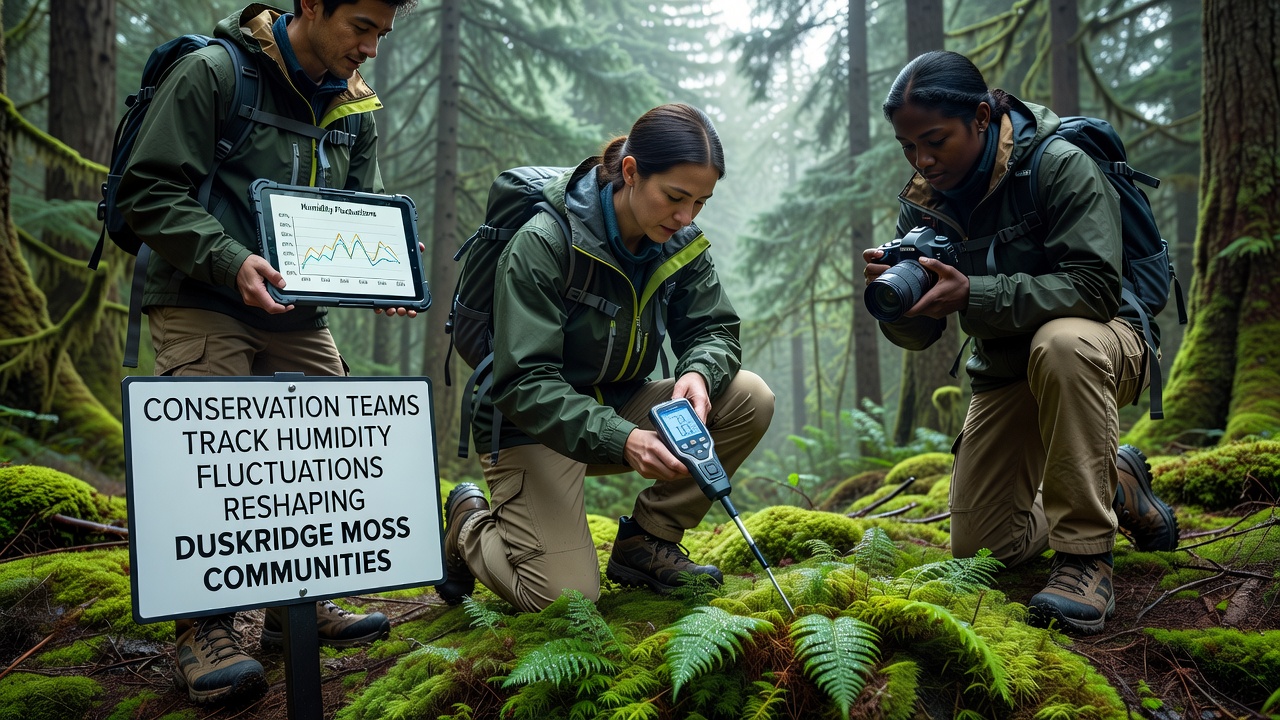
Teams from regional environmental agencies have spent recent seasons installing sensor networks across Duskridge slopes to record shifts in moisture levels that directly influence moss distribution and species composition. These networks collect continuous readings that researchers cross-reference with vegetation surveys conducted every quarter since the monitoring program expanded in 2023.
Data collected through late 2025 shows average relative humidity dropping by 6 to 8 percent in several mid-elevation zones during summer months, while winter readings remain steadier yet exhibit sharper daily swings. Moss communities respond quickly to such changes because many species lack vascular tissue and rely on ambient moisture for photosynthesis and reproduction.
Monitoring Methods and Equipment Deployment
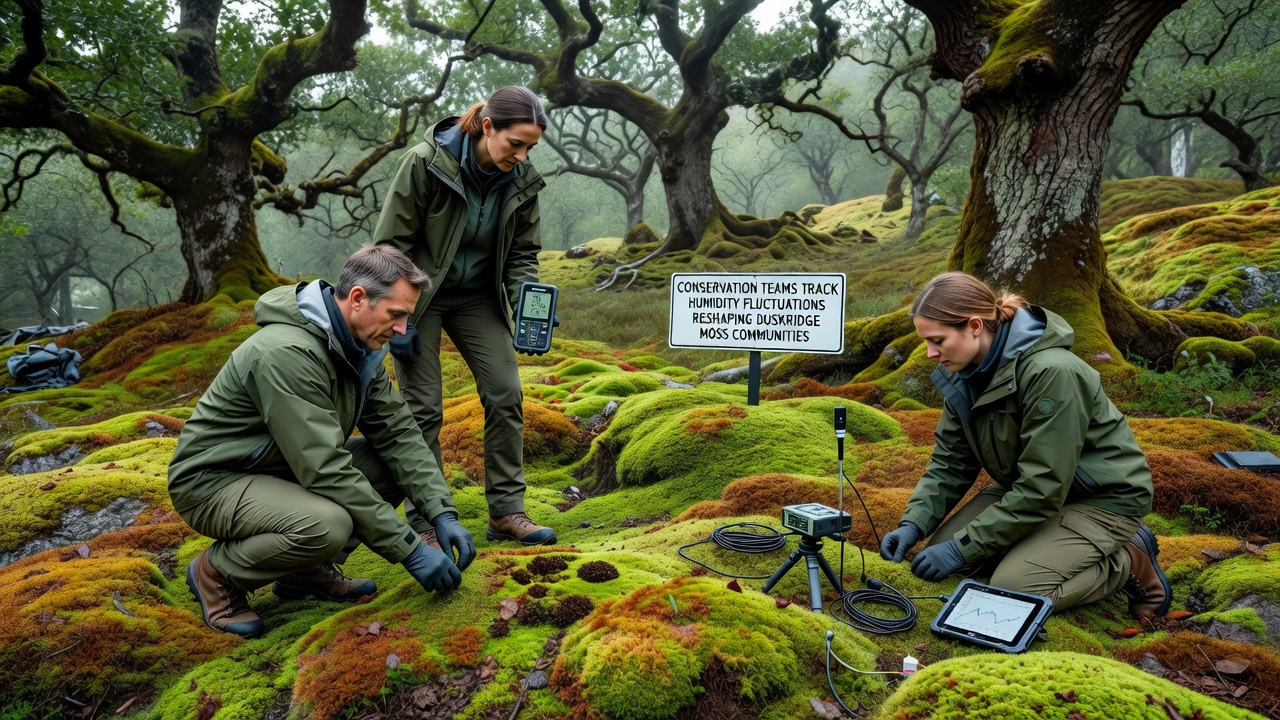
Researchers place miniature data loggers at ground level within existing moss mats and pair them with weather stations mounted at canopy height to capture both microclimate and broader atmospheric trends. Calibration checks occur monthly, and teams upload readings to a shared database maintained by the Duskridge Ecological Research Station.
Survey protocols require field crews to map moss cover along 50-meter transects using standardized quadrats, then photograph each plot for digital analysis of color and density changes. These images feed into software that estimates biomass and identifies dominant species without destructive sampling.
Observed Shifts in Moss Populations
Species such as Hylocomium splendens have declined in patches where humidity variance exceeds 15 percent between day and night, while drought-tolerant Polytrichum juniperinum has expanded into those same areas. Field records indicate that transition zones now stretch an average of 12 meters farther downslope than they did five years earlier.
Spore germination rates measured in controlled chambers drop when relative humidity falls below 65 percent for more than four consecutive days, matching patterns recorded at several Duskridge sites during the unusually dry autumn of 2025. Teams note that these conditions also reduce the frequency of sexual reproduction, limiting genetic diversity within affected colonies.
Regional Context and Supporting Data
Records from the Australian Bureau of Meteorology show comparable humidity trends in temperate rainforests of southeast Australia, where similar moss monitoring programs report parallel species turnover. Those findings prompted Duskridge teams to adopt comparable sensor spacing and data standards to enable cross-site comparisons.
According to a 2024 report from Environment and Climate Change Canada, prolonged humidity reductions accelerate organic matter decomposition rates in forest floors, indirectly altering nutrient availability for mosses and associated fungi. Local crews have begun measuring soil moisture alongside air humidity to capture these interactions.
November 2026 Field Updates
During the November 2026 sampling round, crews documented the first confirmed appearance of Grimmia pulvinata at two previously unmapped locations on north-facing slopes. This species typically favors drier rock faces and its arrival coincides with the lowest recorded autumn humidity averages since monitoring began.
Teams also replaced aging sensors at seven core stations and added three new sites at higher elevations where moss mats remain dense but show early signs of stress. Preliminary analysis of the expanded dataset will be released in early 2027.
Restoration and Management Responses
Conservation groups have tested misting systems on small experimental plots to maintain minimum humidity thresholds during peak dry periods. Early results indicate that treated plots retain higher cover of moisture-dependent species compared with adjacent control areas, although long-term energy and water costs remain under review.
Land managers coordinate with local landowners to limit trail expansion near sensitive moss habitats, since compacted soil and increased sunlight penetration further reduce local humidity. Signage and seasonal closures protect several high-diversity patches during spore-release windows.
Conclusion
Continuous humidity tracking combined with repeated vegetation surveys supplies the factual basis for adaptive management across Duskridge moss communities. As datasets lengthen and regional comparisons improve, the information supports targeted interventions that address specific moisture thresholds rather than broad assumptions about climate effects.