Jakob Frank · 21 September 2026
Elevation Warming Prompts Shifts in Grassland Restoration Strategies Across Duskridge Valleys
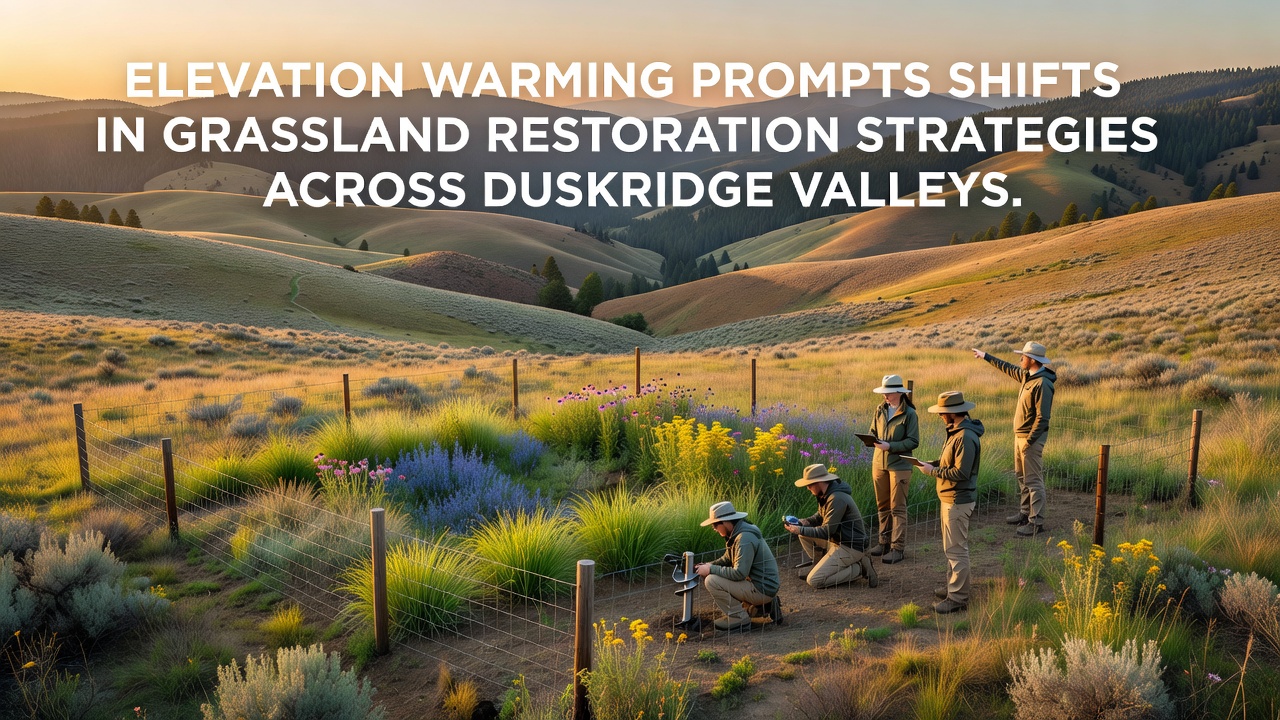
Warmer temperatures at higher elevations have begun altering the plant communities that define grassland restoration work across Duskridge Valleys, and land managers now adjust seed mixes along with soil preparation methods to match these changing conditions. Studies conducted over the past decade document temperature increases that occur more rapidly above 2,000 meters than in lower valley floors, which forces a reevaluation of long-standing restoration protocols that once relied on cooler-climate species.
Data collected by regional monitoring networks show that native bunchgrasses such as Idaho fescue and bluebunch wheatgrass struggle to establish at former elevations while hardier varieties from slightly lower zones expand upward. In September 2026, field reports compiled by the U.S. Geological Survey confirmed a measurable upslope migration of several grass species, with some plots recording a 150-meter average shift in dominant vegetation over just five growing seasons.
Observed Temperature and Precipitation Patterns
Continuous weather stations installed along elevation gradients record average annual temperature rises of 1.8 degrees Celsius since 2015 at the highest monitoring sites, while precipitation arrives more often as rain rather than snow during shoulder seasons. These shifts reduce soil moisture retention during critical germination periods and extend the window when invasive annuals can outcompete slower-growing perennials. Restoration teams therefore incorporate drought-tolerant cultivars earlier in project timelines and apply mulch layers that previously were reserved for lower, drier sites.
Researchers tracking phenology note that peak green-up now occurs two weeks earlier at mid-elevations compared with records from the early 2000s, which compresses the time available for seedling root development before summer heat stress arrives. This compressed timeline has prompted crews to move planting dates forward by 10 to 14 days in many valleys and to test hydrogel amendments that hold additional water near root zones.
Adjustments to Seed Selection and Site Preparation
Seed collection protocols have expanded to include source populations from 300 to 500 meters lower in elevation than traditional guidelines recommended, because those provenances already tolerate the warmer conditions now appearing at higher sites. Nurseries supplying Duskridge projects report increased demand for ecotypes of mountain brome and slender wheatgrass that originate from transitional zones between grasslands and open woodlands. At the same time, crews reduce the use of heavy tilling on steeper slopes to preserve existing soil structure that helps retain the limited moisture delivered by changing precipitation patterns.
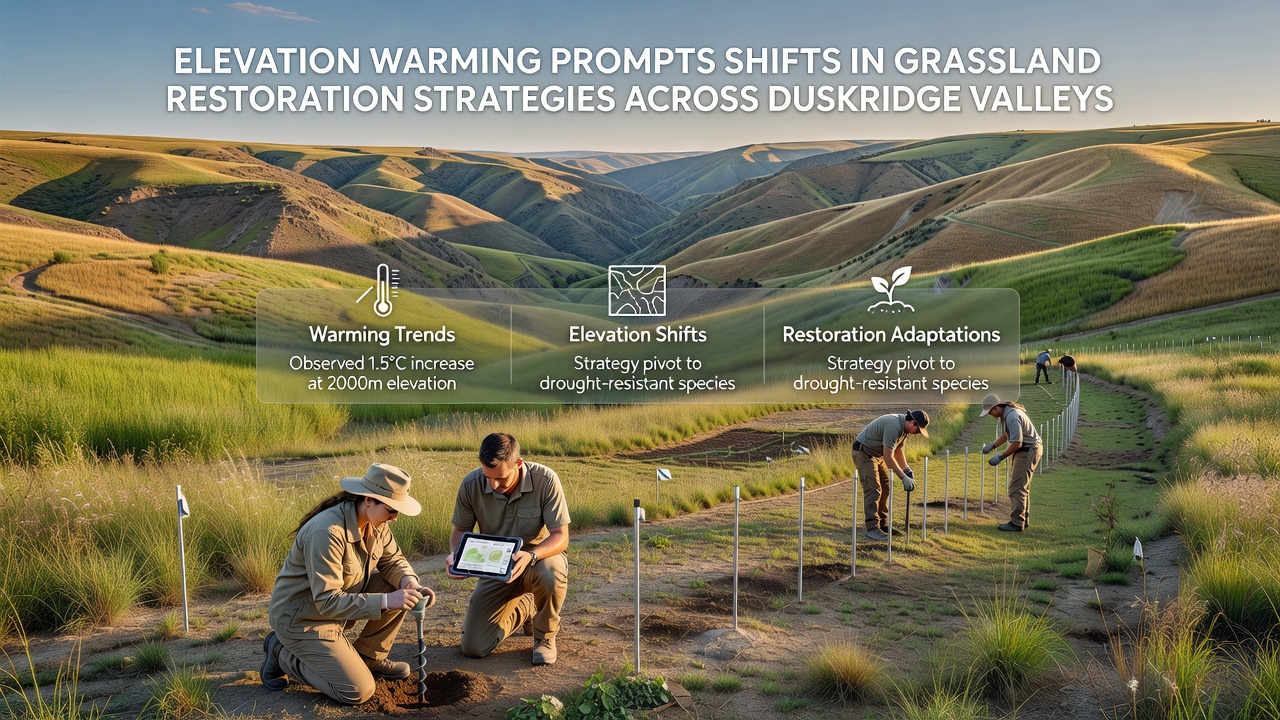
Herbicide application windows have narrowed because earlier snowmelt allows invasive species to bolt before treatment crews can reach remote sites. Managers now schedule targeted spot treatments in late spring and rely more heavily on competitive seeding rates that leave fewer gaps for weeds to occupy. These combined tactics appear in project plans submitted to the Bureau of Land Management offices overseeing portions of the valleys, where performance standards now include survival metrics adjusted for the new temperature baselines.
Monitoring Outcomes and Species Response Data
Long-term monitoring transects established in 2018 reveal that survival rates for traditional high-elevation seed mixes have declined by 22 percent at sites above 2,400 meters, whereas mixes incorporating lower-elevation provenances maintain 65 to 70 percent cover after three years. Soil temperature probes placed at 10-centimeter depth show summer averages exceeding 18 degrees Celsius more frequently, conditions that favor warm-season grasses over the cool-season species historically dominant in these valleys. Observers note corresponding increases in pocket gopher activity that further disturbs newly seeded areas, prompting the addition of protective netting on steeper restoration units.
Remote sensing analysis conducted by university partners indicates that greenness indices derived from satellite imagery now peak and decline earlier across the entire elevation band, which aligns with ground observations of shortened growing seasons at the upper limits of grassland extent. This information feeds directly into adaptive management frameworks that reevaluate success criteria every two years rather than on the previous five-year cycle.
Conclusion
Restoration strategies across Duskridge Valleys continue to evolve in response to documented elevation warming, with updated seed sourcing, altered planting schedules, and revised performance benchmarks now standard practice. Ongoing data collection from multiple agencies and research groups supports these incremental adjustments while highlighting the need for continued flexibility as temperature and moisture regimes shift further.